Pike Push-Ups: Form, Muscles Worked and Progression
How to do a pike push-up with clean form, which muscles it works, how many to do, and the five-stage progression from your first rep to a handstand push-up.
On iPhone

Military Calisthenics Coach
Take the drill with you
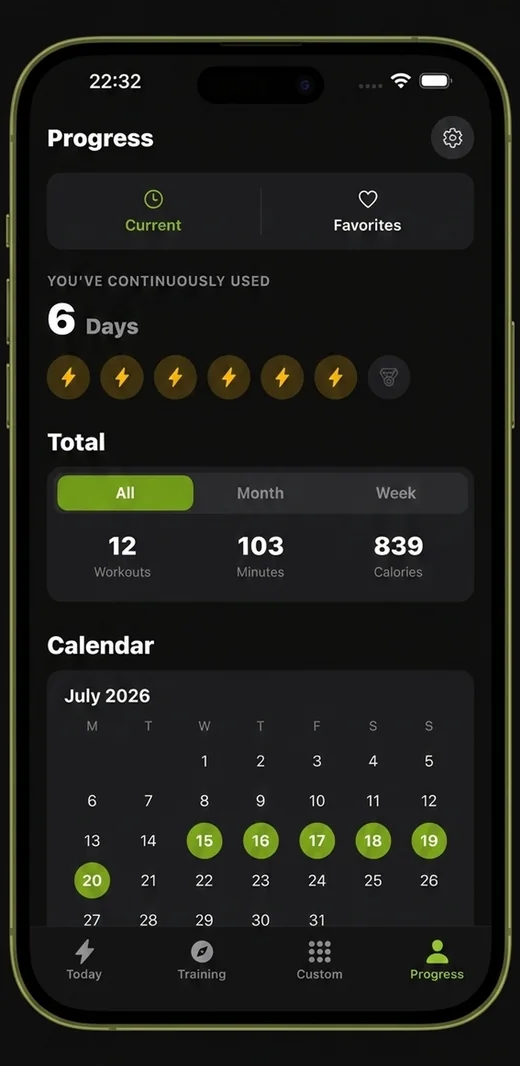
Military Calisthenics Coach is a 21-day military-style calisthenics program for iPhone: one guided bodyweight workout a day, with timed sets and rests, ranks and streaks. It is a separate program from the guides on this site.
- A 21-day military-style program, one workout a day
- Guided timed sessions — no counting, no guessing
- Build your own sessions by time, body zone or focus



Bodyweight training has an obvious answer for chest, back and legs, and no obvious answer for the shoulders. The pike push-up is that answer. Fold at the hips, put your head between your hands, and a push-up becomes an overhead press. It is the first rung of the ladder that ends at a handstand push-up, and the single best shoulder exercise you can do on a floor.
What a pike push-up is
A push-up starting from an upside-down V. Hips high, arms straight, head between the arms. You bend the elbows and lower the top of your head toward the floor just in front of your hands, then press back up.
The angle is everything. In a regular push-up the body is horizontal and the press goes forward, so the chest does most of the work. In a pike push-up the torso is close to vertical and the press goes overhead, so the shoulders take over. The more vertical your torso, the harder it gets and the closer it is to a handstand push-up.
Muscles worked
| Muscle | Role |
|---|---|
| Front deltoids | The prime mover. Pressing overhead is their job |
| Side deltoids | Help, more so as the torso gets more vertical |
| Triceps | Lock out the elbows at the top |
| Upper chest | Helps at the bottom, less than in a regular push-up |
| Upper traps and serratus | Rotate the shoulder blades up so the arm can go overhead |
| Core | Holds the hips high and stops the lower back sagging |
The traps and serratus are the quiet benefit. Most push-up variations never train the shoulder blade to rotate upward, and that rotation is what keeps overhead positions healthy.
How to do a pike push-up
- Start in a push-up position, hands slightly wider than shoulder-width, fingers spread and pointing forward.
- Walk your feet toward your hands until your hips are high and your body makes an upside-down V. Legs straight if your hamstrings allow; a slight knee bend is fine.
- Shift your weight onto your hands. Your shoulders should be roughly over your wrists, not behind them.
- Lower your head forward, not straight down. The top of your head should land a few inches in front of your hands, so your head and hands make a triangle on the floor. Elbows point back at about 45 degrees, not out to the sides.
- Touch lightly or stop an inch short, then press back up until your arms are straight and your shoulders push up toward your ears.
Two seconds down, one second up. Breathe in on the way down, out on the way up.
The mistakes that make it a push-up again
- Hips drifting down. As you tire, the hips sink and it quietly turns back into a chest exercise. If the V flattens, the set is over.
- Head going straight down between the hands. Lowering vertically puts the load behind your hands and strains the shoulder. Head forward, triangle shape.
- Elbows flaring out. Flared elbows shorten the range and stress the front of the shoulder. Keep them at about 45 degrees.
- Half reps. Stopping a hand’s width above the floor skips the hardest, most useful part. If you can’t go deeper, use an easier stage below.
- Cold wrists. You are putting a lot of bodyweight through bent wrists. Do the wrist routine in the five-minute warm-up first, every time.
The pike push-up progression
Each stage lists its exit target. Hit it with full depth on every rep before you move on. As with any ladder, if the next stage cuts your reps to two or three, spend another week where you were.
Stage 1 — Hands-elevated pike push-up
Hands on a bench, a sturdy chair or a low step, feet on the floor, hips high. Raising the hands takes load off the shoulders while teaching the same overhead pattern. Start here if you can’t yet do ten regular push-ups; the push-up progression covers that base.
Target: 3 × 12.
Stage 2 — Floor pike push-up
The standard version described above. The workhorse of this whole ladder, and where most people should spend the most time.
Target: 3 × 12 with the head touching lightly on every rep.
Stage 3 — Feet-elevated pike push-up
Feet on a box or chair, hips stacked as close as you can get them above your shoulders. The higher the feet, the more vertical your torso, and the more of your bodyweight you are pressing. Start at knee height and work up to a box that puts your hips directly over your hands.
Target: 3 × 8 with hips over the hands.
Stage 4 — Deficit pike push-up
Hands on two yoga blocks, a pair of thick books or parallettes, so your head can drop below the level of your hands. The extra range is brutal and builds the bottom position that a handstand push-up needs.
Target: 3 × 6, feet elevated, head below hand level.
Stage 5 — Wall handstand push-up
Kick up into a handstand facing the wall, or walk your feet up it, and lower yourself slowly to the floor. Start with negatives only: five seconds down, then come off the wall and reset. When the negatives are genuinely controlled, try pressing back up. Your first full rep may take months.
Target: 3 × 5 full reps. For the balance side of the skill, follow the handstand progression alongside this.
| Stage | Variation | Exit target |
|---|---|---|
| 1 | Hands elevated | 3 × 12 |
| 2 | Floor | 3 × 12 |
| 3 | Feet elevated | 3 × 8 |
| 4 | Deficit | 3 × 6 |
| 5 | Wall handstand push-up | 3 × 5 |
How many to do, and how often
Three or four sets of 6 to 12 reps, with 90 seconds of rest, two or three times a week. Stop each set one or two reps short of failure. A grinding last rep with the hips sinking teaches the wrong movement.
The pike push-up is the overhead press slot in the upper-body workout and in the push day of the push, pull, legs split. In a full-body session it goes after regular push-ups and before dips. Put it before dips, not after, so tired triceps don’t cut your shoulder sets short.
Alternatives when pike push-ups don’t work for you
- Sore wrists: do them on parallettes or push-up handles so the wrists stay straight, or on your fists on a soft surface.
- Tight hamstrings that stop the hips rising: bend your knees, or use the feet-elevated version, which needs less hamstring flexibility for the same angle.
- Shoulder pain: drop back to the hands-elevated stage and shorten the range. Pain at the front of the shoulder that doesn’t ease with an easier version is a reason to see a physio, not to push through.
- No floor space: a decline push-up with your feet on a chair shifts some of the work toward the shoulders, though far less than a true pike.
Frequently asked questions
What muscles do pike push-ups work?
The shoulders, mainly the front deltoids, plus the triceps and upper chest. The upper traps and serratus hold the shoulder blades, and the core holds the hips up. It is the bodyweight version of an overhead press.
Are pike push-ups harder than regular push-ups?
For most people, yes. The smaller shoulder muscles take over from the chest, so 20 regular push-ups often translates into only 5 to 10 good pike push-ups.
How many pike push-ups should I do?
Three or four sets of 6 to 12, two or three times a week, stopping a rep or two short of failure. At 3 × 12, move to the next stage instead of adding reps.
Are pike push-ups good for beginners?
Yes, once you can do about ten clean regular push-ups. Before that, start with the hands-elevated version on a bench or chair.
Do pike push-ups lead to handstand push-ups?
Yes. Feet-elevated and deficit pike push-ups lead into wall handstand push-up negatives, then full reps. Balance comes from separate handstand practice.