About
About
One session, written properly, beats fifty workout lists. This site is an attempt to write that session — and everything that makes it keep working.
There is no shortage of calisthenics content. There is a shortage of calisthenics programming: content that says what to do on Monday, what changes by Friday, and how you will know it worked. Almost every “best workout” article is a list of exercises with no mechanism for getting harder, which is the only thing that actually produces strength.
So the whole site is organised around one idea. Cover every movement pattern once, make one of them harder each session, write it down. The workout on the front page is that idea in its shortest usable form; the guides are what to do when a piece of it stops fitting you.
How the training is built
- Patterns, not body parts. Six movements cover horizontal push, vertical pull, knee-dominant leg, vertical push, hip hinge and an anti-extension core hold. Split routines come later, if ever.
- Leverage is the load. Without plates, overload comes from angle, tempo, range and limb count. Every progression here names the next rung in both directions.
- Rep ranges, not rep counts. A range tells you when to move on. When the top of the range is clean and controlled, the version you are doing has done its job.
- Recovery is part of the plan. Three full-body sessions a week outperform six half-hearted ones for almost everyone who is not already advanced.
The three grades
Every guide is marked with where it sits on the ladder:
- Beginner You are building your first clean reps and learning what each position should feel like.
- Intermediate The basics are solid. Now it is volume, tempo and harder variations.
- Advanced Skill work — levers, planches, one-arm progressions. Measured in years.
Who writes this
The site is written and edited by a small team of long-time bodyweight trainees. We are not doctors, and nothing here is a diagnosis or a treatment plan. What we can offer is programming that follows the same principles any competent strength coach would use, explained plainly enough that you can adapt it yourself.
Where a claim rests on research rather than on training-hall practice, the text says so. Where something is a judgement call — and a lot of programming is — the text says that too.
One honest caution
Training is a physical stress, and stress can be applied badly. If you are returning from injury, pregnant, managing a heart or joint condition, or simply unsure, talk to a qualified professional before you start. Pain that is sharp, one-sided, or persists past a session is a reason to stop, not a reason to push.
On iPhone

Military Calisthenics Coach
Take the drill with you
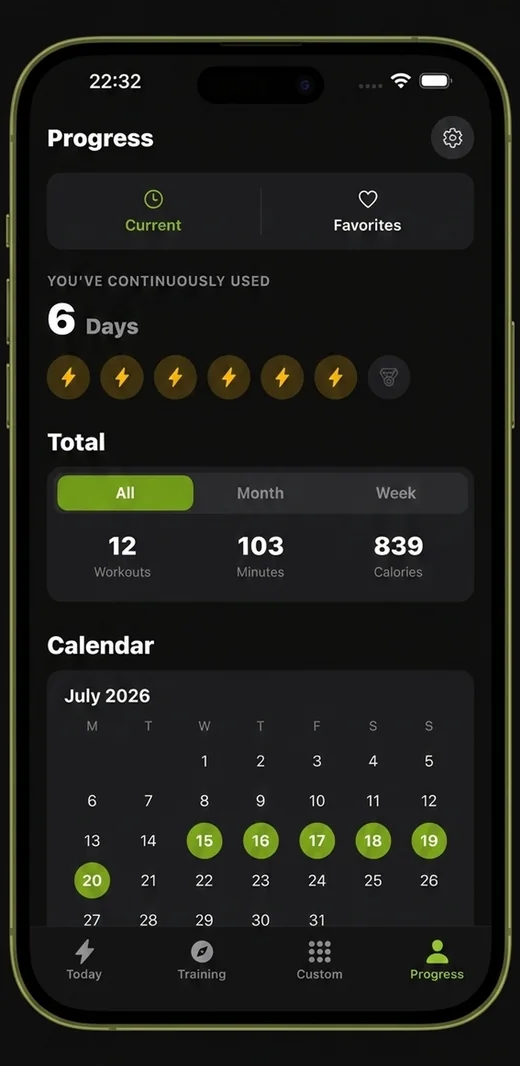
Military Calisthenics Coach is a 21-day military-style calisthenics program for iPhone: one guided bodyweight workout a day, with timed sets and rests, ranks and streaks. It is a separate program from the guides on this site.
- A 21-day military-style program, one workout a day
- Guided timed sessions — no counting, no guessing
- Build your own sessions by time, body zone or focus